
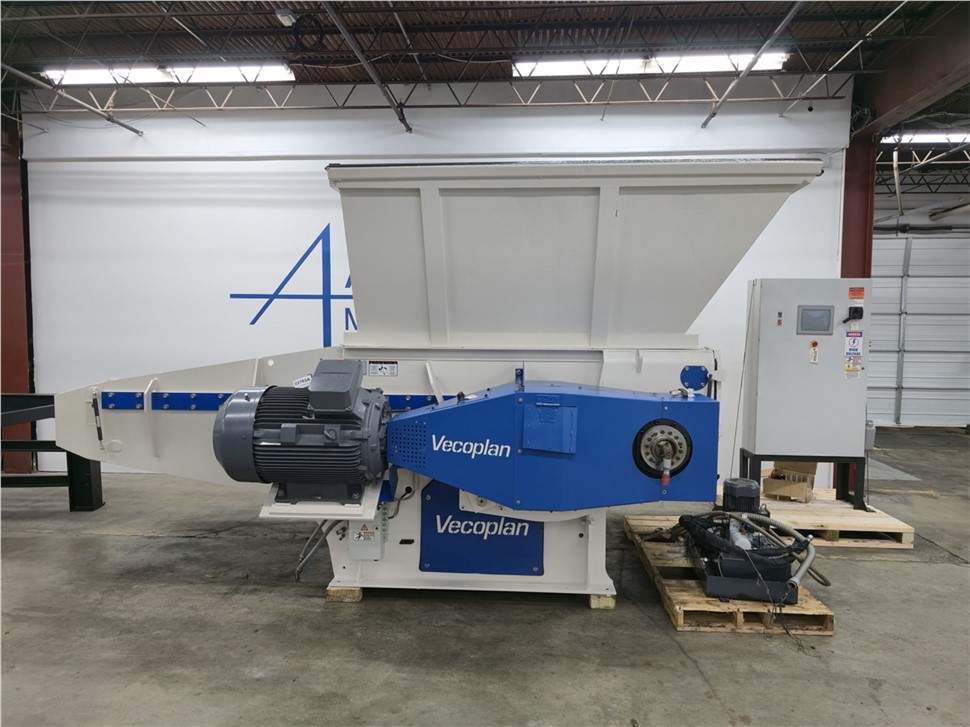
A single-shaft shredder is usually the better choice when you want uniform particle size. A dual-shaft shredder is usually the better choice when you need high torque and aggressive primary reduction of bulky, tough, or mixed material.
Difference | Single-shaft shredder | Dual-shaft shredder |
Cutting layout | One rotor with cutters working against fixed counter-knives. | Two counter-rotating shafts with intermeshing cutters. |
Feed method | Uses a hydraulic ram to press material into the rotor. | The two shafts pull material in by grabbing, tearing, and shearing it. Sometimes, rams can be used to eliminate bridging. |
Output size control | Usually has a screen under the rotor, so material stays in the chamber until it is small enough to pass through. This gives more consistent output. Typical screen sizes 1-4.” | Often, there is no screen in basic two-shaft designs, so output is typically rougher and less uniform. |
Typical role in a line | Final shredder or secondary shredder before granulating, washing, briquetting, extrusion, or other downstream processing. | Primary shredder/pre-shredder for opening up material before sorting, screening, granulating, or secondary shredding. |
.JPEG)
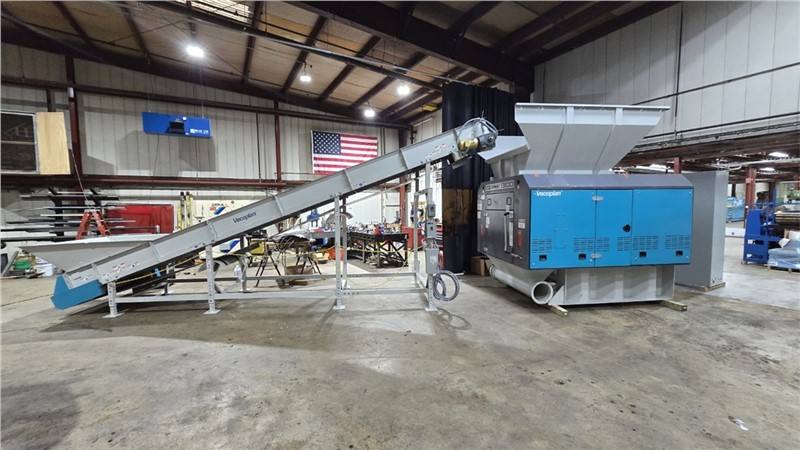
Single-shaft machines are built around one rotating rotor, a ram, counter-knives, and a screen; the screen defines the particle size that can exit the chamber. A single-shaft shredder rotor operates at a higher RPM. Material is pushed into the rotor and shredded against counter-knives. The hydraulic ram cycles with a timer or amperage feedback. Single-shaft shredders range in size. The majority of machines on the market are in the 32"-72" rotor-width range. Typically, horsepower on the main motors would be 75-200hp. View Our Single Shaft Shredder Inventory
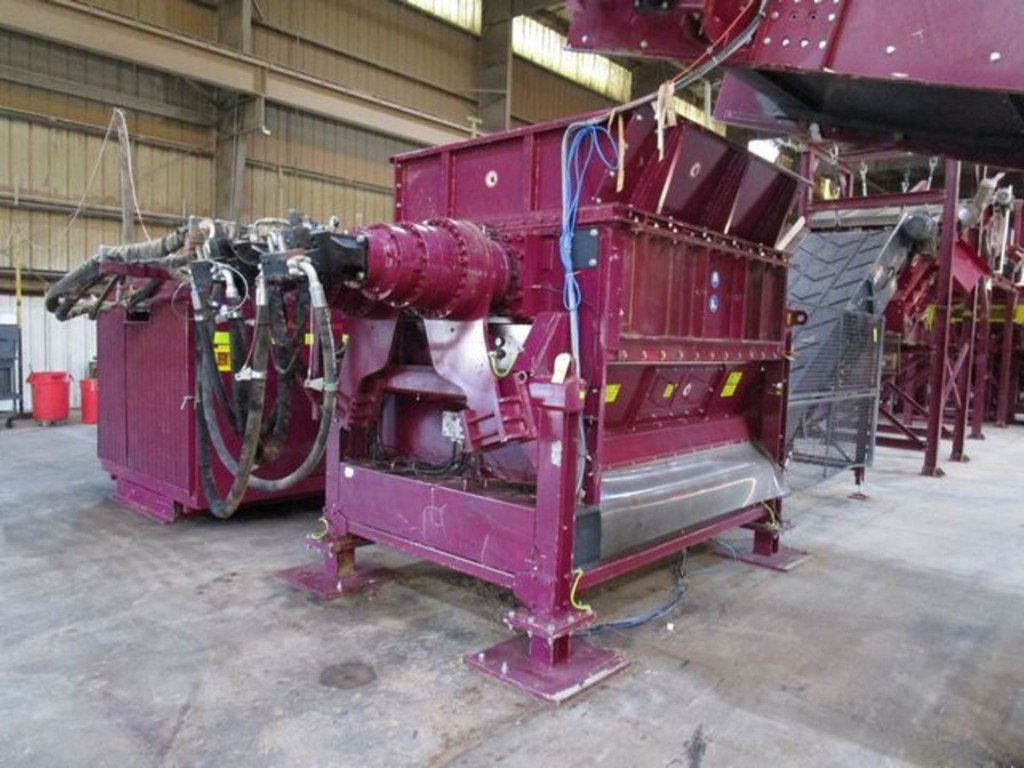
Dual-shaft machines are built around two counter-rotating shafts. Typically, for primary size reduction. These machines have much less rpm, and torque is the priority. The material size will vary after being shredded. Machine sizes vary widely in the dual-shaft category. From small 10hp e-waste machines to 400 hp large metal shredders. Click here to see what's available in dual-shaft configurations
Why a single-shaft shredder?
Use a single-shaft shredder when the downstream process requires particle-size consistency.
Good fits include:
Use case | Why single-shaft fits |
Plastic recycling: purgings, lumps, crates, bottles, film, pipe offcuts, injection molding scrap | Screen-controlled output is useful before washing, granulation, extrusion, or pelletizing. |
Wood waste: pallets, offcuts, particleboard, MDF, furniture components | Produces more controlled chip size for boilers, briquetting, or further processing. |
Paper, cardboard, foam, foil, textiles | To prepare for baling. |
Secondary size reduction | A dual-shaft may first break bulky material down, then a single-shaft produces a more uniform final size. |
Recycling lines with strict feedstock requirements | The screen lets you tune output size by changing the hole size. |
A single-shaft shredder is often the right answer when the question is: “Can I get this material to a repeatable, controlled size for the next process?”
Why dual-shaft shredder?
Use a dual-shaft shredder when the first problem is breaking down bulky or difficult material.
.jpg)
Good fits include:
Use case | Why dual-shaft fits |
Primary shredding of bulky waste | Two shafts aggressively pull in and tear large items. |
Mixed industrial waste or C&I waste | Better tolerance for irregular feed and mixed shapes. |
E-waste and appliances | Useful for opening up material before sorting or separation. |
Tires, automotive parts, drums, containers, pallets | automotive parts, household products, wood scrap, e-scrap, and product destruction as common dual-shaft applications. |
Document destruction on an industrial scale | Dual-shaft systems are commonly used where destruction and throughput matter more than highly uniform particle sizing. |
Pre-shredding before a granulator or single-shaft shredder | Reduces oversized material so downstream equipment runs more steadily. |
Practical selection rule
Choose a single-shaft shredder when you need uniform output size and are feeding a downstream process such as a granulator, wash line, or extrusion line.
Choose a dual-shaft shredder when you need high-torque primary reduction, are handling bulky, irregular, mixed, contaminated, or hard-to-feed material, and the output size can be rough or handled by downstream screening/secondary shredding.
In many recycling plants, they are used together: dual-shaft first for rough reduction, single-shaft second for controlled sizing.